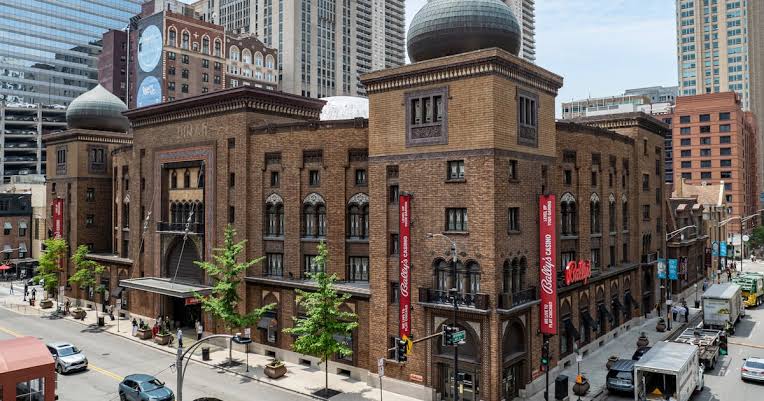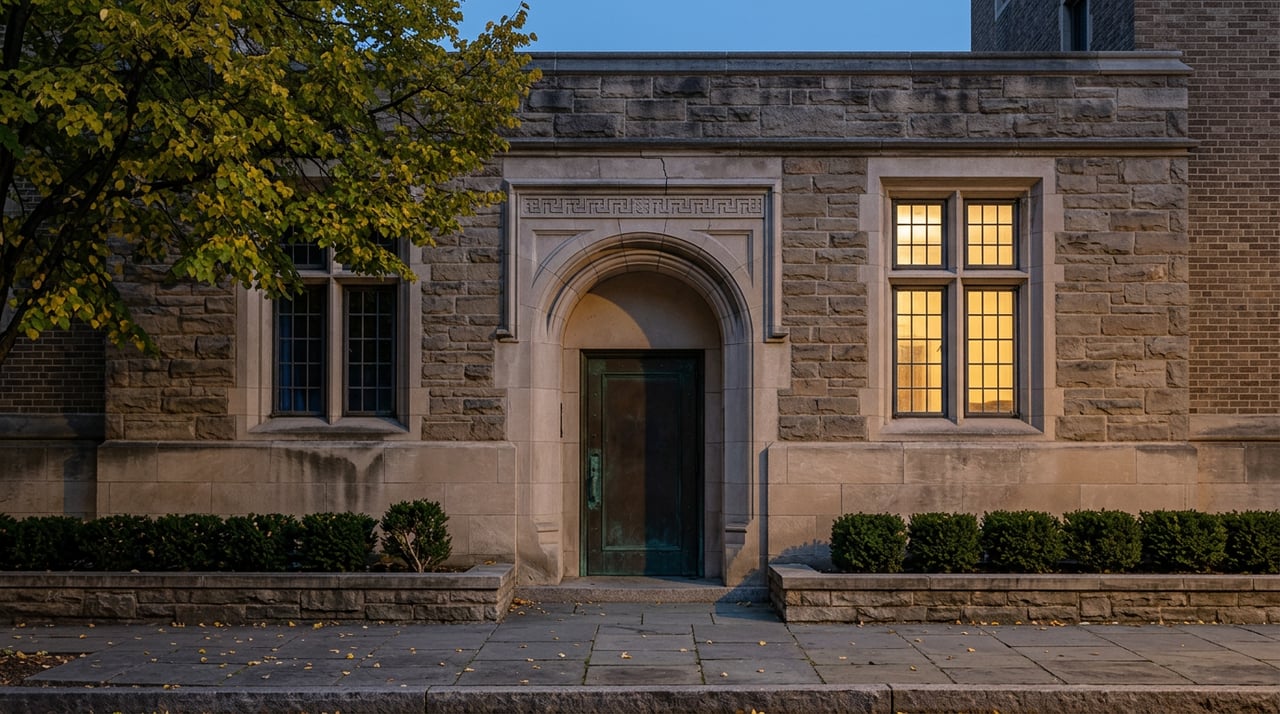
Walk past 5311 S. Lake Park Ave. this month and you'll smell brisket instead of hearing a soundcheck. That's new. For eleven years, the building was Hyde Park's answer to the question of where to catch a show on a Tuesday night. Now it's dinner, full stop, and the upstairs room that used to host Common, El DeBarge, and Tems sits dark while the University of Chicago figures out what goes there next.
A few blocks away, the Hyde Park Jazz Festival marks its 20th year this September. Last year's edition drew what organizers called record crowds, and two other neighborhood festivals folded.
Eleven Years, One Corner
The Promontory opened in 2014 as part of the 16" On Center family, the same group behind Thalia Hall and the Salt Shed, and it built an eclectic run that would be hard to replicate anywhere on the South Side. Chicago rappers like Vic Mensa and King Louie played there. So did jazz elder Roscoe Mitchell. Party Noire, one of the city's premier LGBTQ events, called it home. Barack Obama sat for an Obama Foundation talk on that stage in 2023. Dyett High School students performed at Intonation Music's winter showcase there in December 2024, just months before the doors closed for good.
The venue also did double duty as a community hall. When a migrant shelter opened nearby in 2023, Ald. Desmon Yancy addressed a packed room at the Promontory because there was nowhere else in the neighborhood that could hold the crowd.
None of that saved it. The University of Chicago, which owns the building, confirmed the venue chose not to renew its lease after negotiations didn't pan out. The Promontory played its final set just after midnight on New Year's Eve 2025. In the announcement, the operators wrote only that they would "turn off the lights at The Promontory for the last time," without naming a reason. Former general manager Austen, who had stepped down earlier that year, later pointed to the live music industry's thin margins, noting the venue had strung together two bad quarters in a row with more open dates than they could fill. He also noted that most nightlife venues last around 18 months. The Promontory beat that by a decade, which says less about failure than about how hard the model was to sustain in the first place.
What Moved Into the Same Address
The university didn't sit on the space for long. Sanders BBQ Prime, a sit-down spinoff of the Beverly barbecue counter Sanders BBQ Supply Co., opened in the Promontory's former ground-floor restaurant this summer. The original Sanders location earned a James Beard Award semifinalist nod for chef James Sanders and pitmaster Nick Kleutsch and landed on the New York Times' list of the 50 best restaurants in the country in 2025. The Hyde Park expansion is Sanders' own description of his "signature restaurant," with steaks, plated dinners, and beef tallow smoked popcorn replacing the counter-service format that built the brand's name in Beverly.
It's a genuine upgrade for anyone who wants a serious dinner on 53rd Street. The upstairs concert hall that used to run a calendar of touring acts and community forums remains empty while the university looks for what it called a tenant who can "enhance the vitality and creativity of the neighborhood."
The Hyde Park Jazz Festival's 20th Year
Here's what makes the Hyde Park Jazz Festival's timing worth paying attention to. Over the past several years, Hyde Park lost more than one nightlife anchor. Hyde Park Summer Fest folded. So did the Silver Room Block Party, a South Side staple for over a decade.
The Jazz Festival is a free, donation-supported nonprofit backed by the Reva & David Logan Foundation, the MacArthur Foundation's Art Together at the Field Foundation, the University of Chicago's Office of Civic Engagement, the Illinois Arts Council, and a base of individual donors who show up every June for a benefit concert. This year's benefit, held June 29 at the Obama Presidential Center, honored longtime supporters Willie Pickens and James Wagner alongside the roughly 200 volunteers who staff the festival every year.
| The Promontory (2014–2025) | Hyde Park Jazz Festival (2026) | |
|---|---|---|
| Calendar | Year-round, most nights of the week | One weekend, September 26–27 |
| Footprint | Single building on Lake Park Ave. | Midway Plaisance plus a dozen partner venues |
| Funding | Ticket and bar revenue | Grants, foundation support, individual donors |
| Cost to attend | Paid tickets | Free, suggested $10 donation |
Where the Music Actually Is This Year
If you want live jazz in Hyde Park this fall, the festival is a weekend worth planning around. The 20th anniversary runs Saturday, September 26 from noon to 10 p.m. and Sunday, September 27 from 1 to 7 p.m., spread across the Midway Plaisance and neighborhood institutions including the Logan Center, the Smart Museum, and Rockefeller Chapel.
A few things worth building your weekend around:
- Rockefeller Chapel hosts a solo set from Joshua Redman Saturday night in a room built for choral acoustics rather than a jazz combo, which is exactly why regulars treat it as the marquee ticket of the weekend.
- The anniversary lineup includes a specially assembled HPJF 20th Anniversary Band featuring Hill, McCraven, Paul, and Ross, alongside the Alfredo Rodriguez Quintet and the Ari Brown Quintet, the latter led by a South Side saxophonist whose career predates the festival itself.
- Big Chief Donald Harrison brings New Orleans Mardi Gras Indian tradition into the mix, one of the wider-ranging bookings on a bill that has always leaned into swing, bebop, and the avant-garde in the same afternoon.
- Admission is free across all venues, with a suggested $10 donation that funds next year's lineup.
The schedule puts the festival in a different role from a year-round venue like the Promontory.
What It Adds Up To
The Promontory's former restaurant space now houses Sanders BBQ Prime, while the university has not announced a tenant for the upstairs concert hall. The Hyde Park Jazz Festival returns for its 20th anniversary weekend, with free performances supported by institutional and individual funding.
If you're weighing what a neighborhood like this means for your own next move, from a Kenwood greystone to a high-rise near the Point, Spradling | Roberts spends as much time tracking Hyde Park's cultural calendar as its closing prices. Schedule a private consultation when you're ready to talk about what living here actually looks like, week to week.